If you owned a shop 50 years ago, you didn’t need a spreadsheet to know how business was going. You just looked outside: Were people walking in? That was foot traffic, and it was the single clearest measure of demand.
Then came the internet. Storefronts went digital, and “traffic” meant visitors to your website. Search engines became the new sidewalks, and businesses fought for rankings because they knew the truth: if you weren’t on page one of Google, you didn’t exist.
For two decades, this was the playbook. Brands optimized for SEO, tracked clicks, and built funnels around traffic. And with good reason. Organic search has consistently driven more than half of all web traffic. Businesses that blog regularly generate 67% more leads than those that don’t.
But now, for the first time in 20 years, the game is changing again.
The New Channel: Large Language Models
ChatGPT, Gemini, Claude, Perplexity. These aren’t just novelties. They are quickly becoming the new discovery layer of the internet. Instead of searching, people are asking. Instead of clicking, they are conversing. And increasingly, they are trusting the answer more than the list of links.
As of today, over half of U.S. consumers to be using AI assistants daily. For businesses, that means the next wave of “traffic” may never touch your website at all if the LLM answers the question before the user even gets there.
Why Traffic Still Matters
The story traffic tells has never changed. When it drops, sales usually follow. Deloitte found that small declines in physical foot traffic can have outsized impacts on sales performance . Online, the same pattern holds: traffic is the pipeline to conversion.
But here’s the paradox. Many businesses today report stable or even rising conversion rates while their overall traffic is shrinking. That’s because discovery is shifting. Customers who once landed on your site through SEO now get their answers inside an LLM.
Conversions alone don’t tell the whole story anymore. Traffic is still the signal, but the drivers have changed.
What This Means for eCommerce Businesses
Attention is being redistributed. Instead of 10 search results, an LLM often gives just one or two answers. If you’re not in them, you’re invisible.
Trust is moving upstream. Customers increasingly trust the AI’s recommendation before they ever see your site.
The advantage goes to early adopters. Just as brands who mastered SEO in 2005 built moats around their businesses, the companies who master LLM visibility today will define the next decade.
What You Can Do Now
Audit Your Visibility: Ask ChatGPT, Gemini, and Perplexity about your industry. Does your brand show up?
Optimize for LLMs: Use structured content, FAQs, product descriptions, and authority signals that LLMs can pull from.
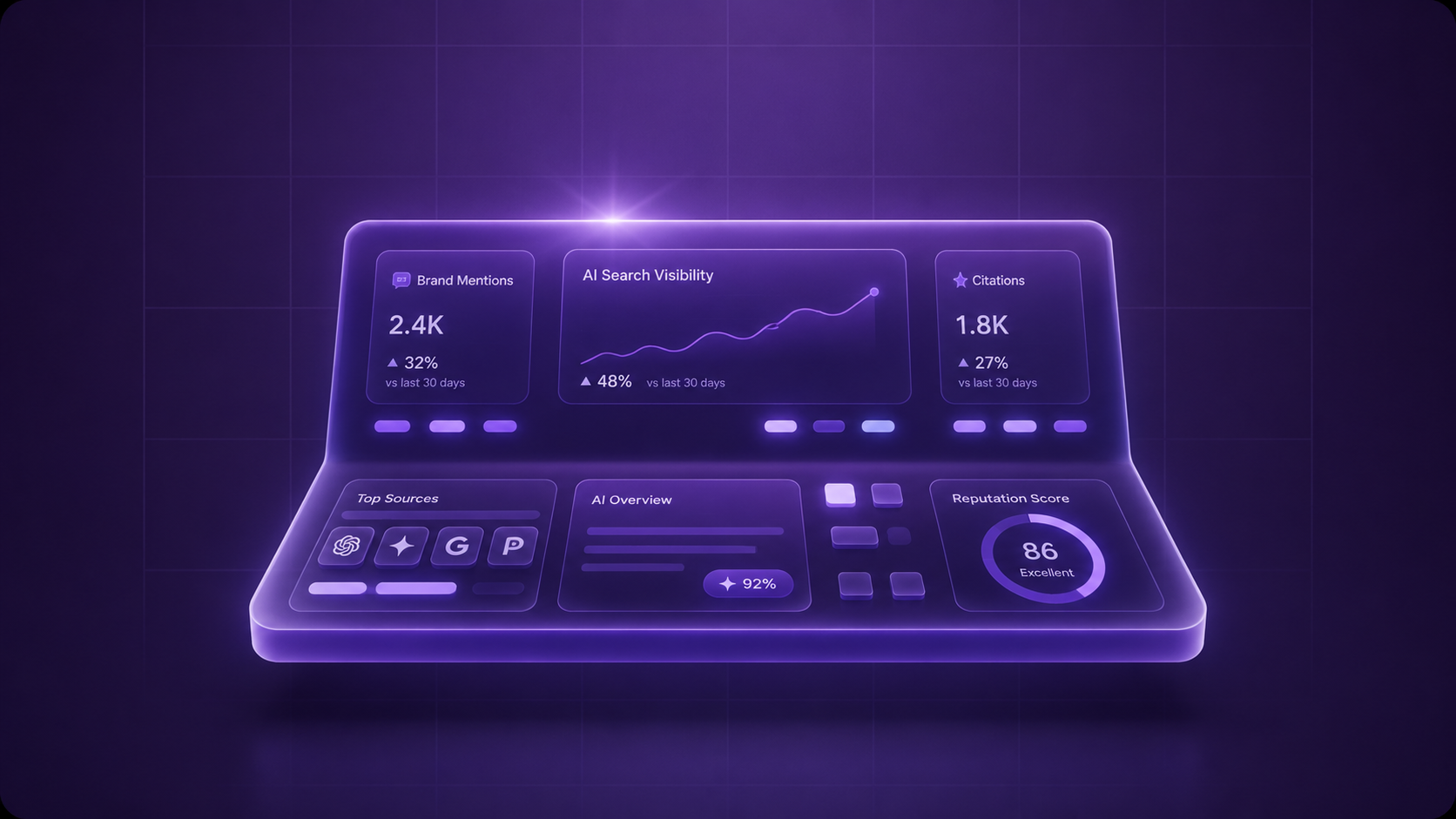
Track LLM Mentions: New tools are emerging to measure “Answer Engine Optimization” (AEO), the SEO of the LLM era.
Expand KPIs: Don’t just measure conversion rates. Measure how and where your brand is discovered inside AI answers.
Bottom Line
Traffic has always been the most measurable and revealing metric of business success. From footsteps to pageviews to LLM impressions, it tells the story of whether people are finding you. The platforms may change, but the truth does not. No traffic. No growth.
What is different today is that the definition of traffic is expanding beyond search and social. Customers are increasingly discovering brands through large language models. That makes your visibility inside AI answers just as critical as your Google ranking was 15 years ago.
This is where GeckoCheck comes in. Our platform helps brands measure and improve their visibility across AI discovery channels. We show you how often your brand appears in LLM answers, how you compare to competitors, and what actions can grow that presence.
The question now is simple. When your future customer asks an AI assistant for the best option, will your business be in the answer? And if not, what are you doing today to change that?